Short answer: for the drive from Denver to a ski resort in winter, you want AWD or 4WD — and good winter tires matter more than most people realise.
Here's the longer version, without the sales pitch.
What each one actually does
Two-wheel drive (2WD) sends power to two wheels — front or rear. Perfectly fine on a ploughed highway in clear weather. Under Colorado's Traction Law, 2WD vehicles must carry chains or an approved traction device on the I-70 corridor from September through May.
All-wheel drive (AWD) sends power to all four wheels automatically, adjusting as grip changes. It's the right system for mixed conditions — dry pavement, packed snow, slush, and back again — which is exactly what a Denver-to-Vail drive throws at you.
Four-wheel drive (4WD) is a more rugged system, usually driver-selectable and built for low-traction terrain: deep snow, gravel, forest service roads, steep unploughed driveways.
The thing nobody tells you — tires matter more than drivetrain
AWD helps you get going. It does very little to help you stop.
Braking and cornering on snow and ice are almost entirely down to your tires. An AWD vehicle on worn all-season tires can accelerate confidently out of a parking space and then slide straight through a junction. All-season tires can take well over twice as long to stop in genuine winter conditions.
This is why Colorado's Traction Law regulates tires as tightly as drivetrain, and why we run winter tires rated for snow on every vehicle regardless of the season.
The order of priority for a Colorado winter drive: winter-rated tires with good tread first, AWD or 4WD second, everything else after.
Which do you need for a ski trip?
Driving I-70 to Vail, Breckenridge, Keystone, or Copper: AWD with winter tires rated for snow. That's the sweet spot — compliant, capable, and comfortable for a two-hour highway run.
Staying in a mountain town with steep or unploughed access: AWD is still fine, but 4WD gives you more margin on a steep icy driveway. This is where visitors most often get stuck — not on the interstate, but on the last 200 metres.
Summer trailheads, gravel, forest service roads: 4WD. Ground clearance matters as much as the drivetrain here.
City driving in Denver, May through September: honestly, anything. This is where 2WD is genuinely fine.
Can you rely on getting AWD from a rental company?
Not usually, and this catches people out.
Most national chains book you into a vehicle class rather than a specific drivetrain, and the answer at the counter is that it depends on what's available when you arrive. Some travellers pay a significant premium purely to guarantee four-wheel drive.
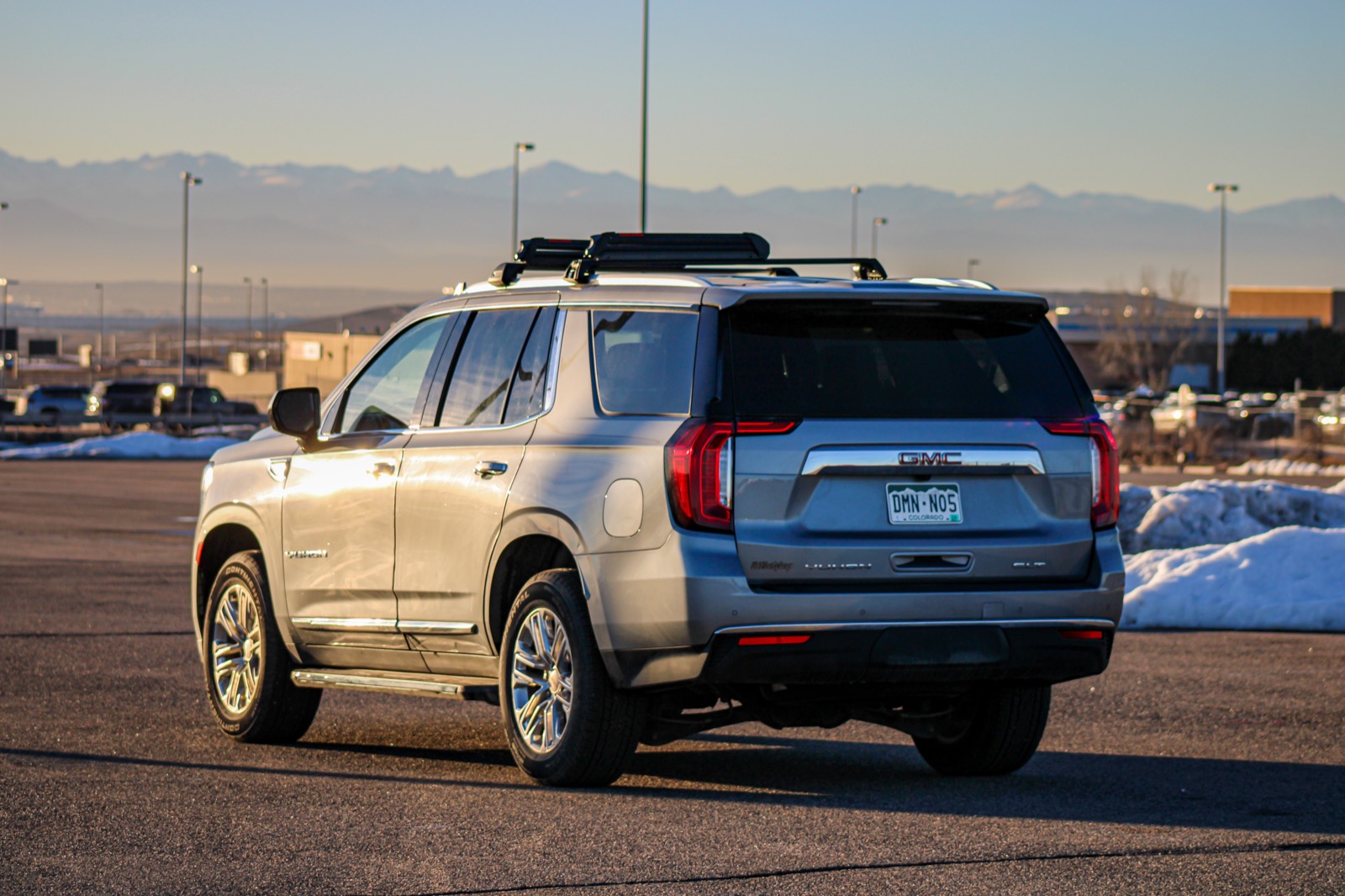
Our fleet removes the question: every vehicle is AWD or 4WD, with no 2WD option at all. The vehicle you book is the vehicle you get.
Quick reference
- DEN to a ski resort, Nov–Apr: AWD + winter tires — Traction Law compliant, best for mixed highway conditions.
- Mountain town with steep access: AWD or 4WD — margin on unploughed driveways.
- Summer trailheads and gravel: 4WD — clearance and low-traction capability.
- Denver metro, summer: anything — no traction requirement in play.
Every SUV we deliver to Denver International Airport is AWD or 4WD on winter tires rated for snow, with a free ski rack on every winter rental. Browse the fleet, see how delivery works, or read the full Traction Law guide.